
When drawings start working for you
Drawings often contain the information needed in a construction project—but that information isn’t always easy to use in practice. In this article, iBinder Product Manager Rikard König shares his perspective on how automation and AI can improve data quality, strengthen information management, and increase efficiency across construction and real estate projects.

In many projects, significant time is still spent manually registering and structuring metadata linked to drawings. When this work is done manually, variations in how information is entered are almost inevitable—affecting both searchability and data quality.
This is where automation, supported by AI, begins to play a crucial role.
When data is handled manually, variation occurs
When drawing information is registered manually, natural variations arise. The same type of data may be handled differently depending on the user or the project. Over time, this impacts searchability, traceability, and the overall quality of the data passed on to the next stage of the process.
According to Rikard König, Product Manager at iBinder, the challenge often comes down to balancing speed and data quality:
- It often comes down to time constraints, lack of structure, and requirements from later stages of the project. Making metadata fields mandatory improves data quality, but can slow down deliveries. Keeping them optional speeds up the process, but reduces searchability and overview.
Automation that strengthens data quality
By automating the identification and registration of drawing information, organisations can reduce variation in data input and create a more consistent information foundation. This is not just about improving efficiency in individual projects—it’s about maintaining data quality over time.
The next phase of digitalisation is therefore not about adding more systems, but about improving the quality of data. When information is structured from the project phase onwards, decision-making is strengthened both during construction and in long-term asset management.
Secure information management in complex projects
At the same time, high demands are placed on secure information management. In projects where many stakeholders collaborate, automated data handling must be combined with clear control over access and permissions.
“We train our models separately from the production environment and only on data that customers have chosen to share with us. The values extracted are used solely for metadata and are only accessible to users who have permission to access the relevant files,” says Rikard König.
A step towards data-driven workflows
Against this backdrop, iBinder now offers an AI-powered feature for automated handling of drawing information. By analysing drawings and making relevant information available directly within the platform, the need for manual work is reduced—while project efficiency increases.
It’s a step towards a more data-driven way of working, where the system not only stores documents but actively supports how information is used throughout the entire project lifecycle.
How iBinder works
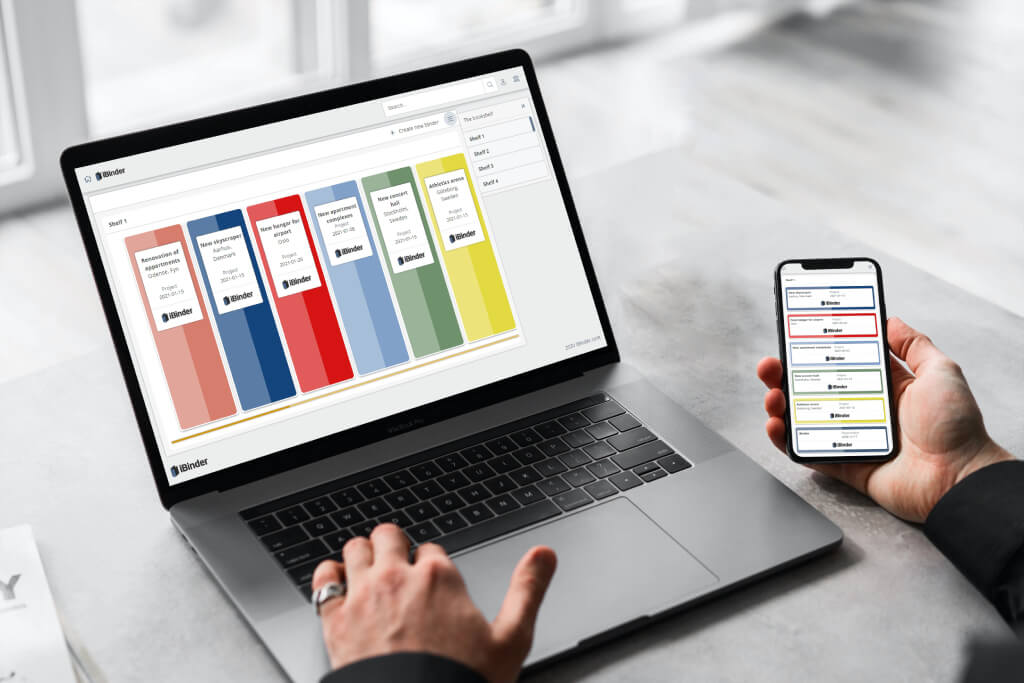
iBinder is a cloud-based platform that helps the construction and real estate industry better manage information and documentation about their properties.