
The EU Renovation Wave - existing buildings are driving a construction boom
Across Europe, existing buildings have become important focus points of climate, energy and investment policy.

At the centre of this is the EU’s Renovation Wave initiative. According to the European Commission, buildings account for around 40% of energy consumption and 36% of CO₂ emissions in the EU, making renovation essential to meeting climate targets and making Europe less reliant on energy imports. In this article, we will look at how the Renovation Wave is already an important part of the construction projects today, and will be for the foreseeable future.
What is the EU Renovation Wave?
The Renovation Wave is a flagship initiative under the EU Green Deal, launched to address the climate and energy impact of Europe’s existing building stock. The aim of the programme is to renovate 35 million buildings by 2030.
Its core objectives are to:
• Double the annual renovation rate by 2030
• Reduce energy consumption and emissions from buildings
• Improve building performance, indoor climate and resilience
• Stimulate jobs and investment across the construction value chain
The European Environment Agency reports that existing buildings represent the largest untapped potential for emissions reduction, even in high-performing countries.
Almost 75% of the building stock is currently energy inefficient and more than 85% of today's buildings are likely to still be in use in 2050. Energy renovation of buildings is ongoing but at a very slow rate.
How is this to be achieved?
In practice, renovation projects increasingly combine:
• Energy upgrades
• Technical system replacement
• Improved documentation and lifecycle data
• Compliance with both national and EU-level reporting
Renovation is an information-heavy discipline
Unlike new construction, renovation projects often begin with incomplete or unreliable documentation. Drawings may be outdated, technical systems undocumented, and past alterations poorly recorded.
As a result, renovation projects depend heavily on:
• Accurate as-built information
• Structured documentation of discoveries and changes
• Continuous updates as conditions evolve
• Clear traceability for future operation and compliance
This is why renovation is not just a construction challenge, but an information management challenge.
The Renovation Wave in the Nordics
In several ways, the Nordics are ahead of the curve. Although Nordic buildings are generally more energy-efficient than the EU average, they also:
• Have a large stock built between the 1950s–1980s, now in need of deep renovation
• Face tightened national climate and energy requirements
• Operate in cold climates where energy performance is more important than further south
Below are some examples of renovation activity aligned with EU and national Renovation Wave objectives.
Sweden – Million Programme housing renovations
Large-scale renovation of post-war residential buildings is underway across Sweden, supported by national energy efficiency goals and EU funding mechanisms.
Stockholm’s public housing companies are renovating large parts of the Million Programme (miljonprogrammet, housing built 1965-75), focusing on energy performance, indoor climate and long-term asset management.
Denmark – Energy renovation of public buildings
Denmark has prioritised deep renovation of schools, hospitals and municipal buildings to meet climate targets. Municipal energy renovation programmes supported by the Danish Energy Agency aim to reduce energy use in public buildings through systematic upgrades.
Finland – Deep renovation of residential buildings
Finland is actively promoting energy-efficient renovation of apartment buildings, many built in the 1960s–70s. ARA (Housing Finance and Development Centre of Finland) supports renovation projects that improve energy efficiency and accessibility in existing housing stock.
Norway – Existing building upgrades and digital documentation
While not an EU member, Norway aligns closely with EU energy policy through the EEA agreement.
Why renovation changes documentation requirements
Renovation projects are increasingly subject to:
• Energy performance reporting
• Climate declarations (in several Nordic countries)
• Funding and subsidy documentation
• Long-term asset management requirements
The EU Commission emphasises that reliable building data is essential to scaling renovation and measuring impact. In other words, renovation success depends not only on execution — but on structured, accessible and verifiable information.
For contractors, consultants and asset owners, the Renovation Wave brings challenges:
• More projects focused on existing buildings, not greenfield sites
• Higher expectations on documentation quality
• Greater importance of lifecycle information
• Increased collaboration between construction and operations
Those who treat renovation as “business as usual” risk underestimating both complexity and opportunity.
Renovation is where construction meets the future
To sum up, the EU Renovation Wave is not a temporary programme — it reflects a permanent shift in how Europe builds, upgrades and manages its buildings.
For the Nordic construction industry, renovation is no longer a niche. It is becoming a major project type, with information quality as a decisive success factor.
Sources
Europeiska kommissionen – The Renovation Wave
https://energy.ec.europa.eu/topics/energy-efficiency/energy-efficient-buildings/renovation-wave_en
Europeiska miljöbyrån (EEA) – Buildings and construction
https://www.eea.europa.eu/en/topics/in-depth/buildings-and-construction
How iBinder supports renovation projects
-
Centralised documentation for existing buildings
-
Continuous updating of as-built information
-
Clear traceability for compliance and funding
-
Improved handover for long-term asset management
-
Reduced risk in complex, phased projects
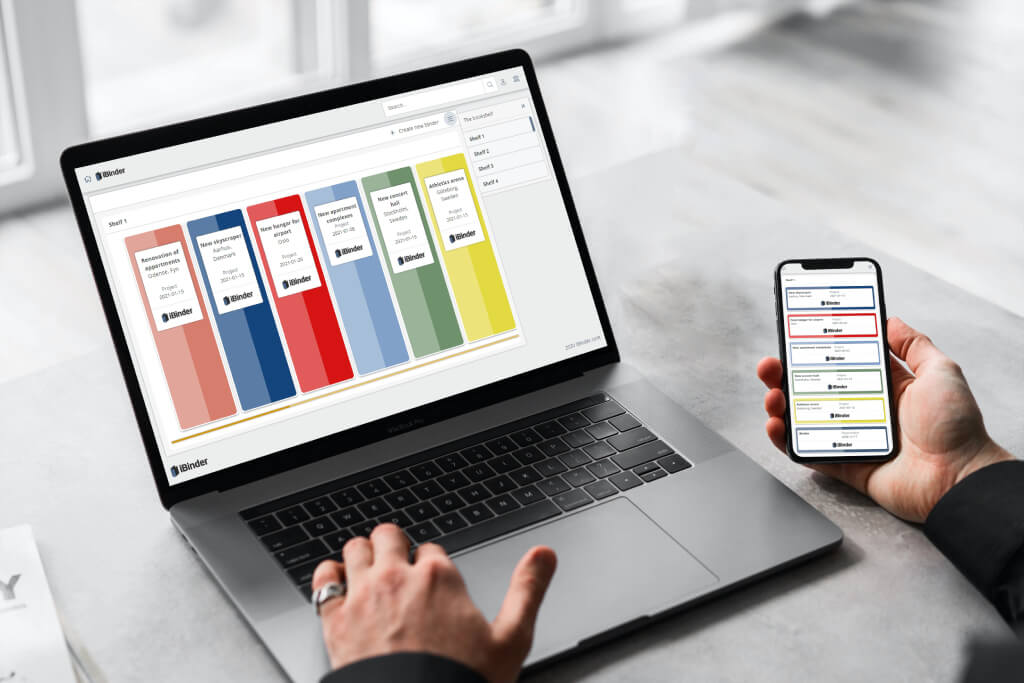
How iBinder works
iBinder is a cloud-based platform that helps the construction and real estate industry better manage information and documentation about their properties.